
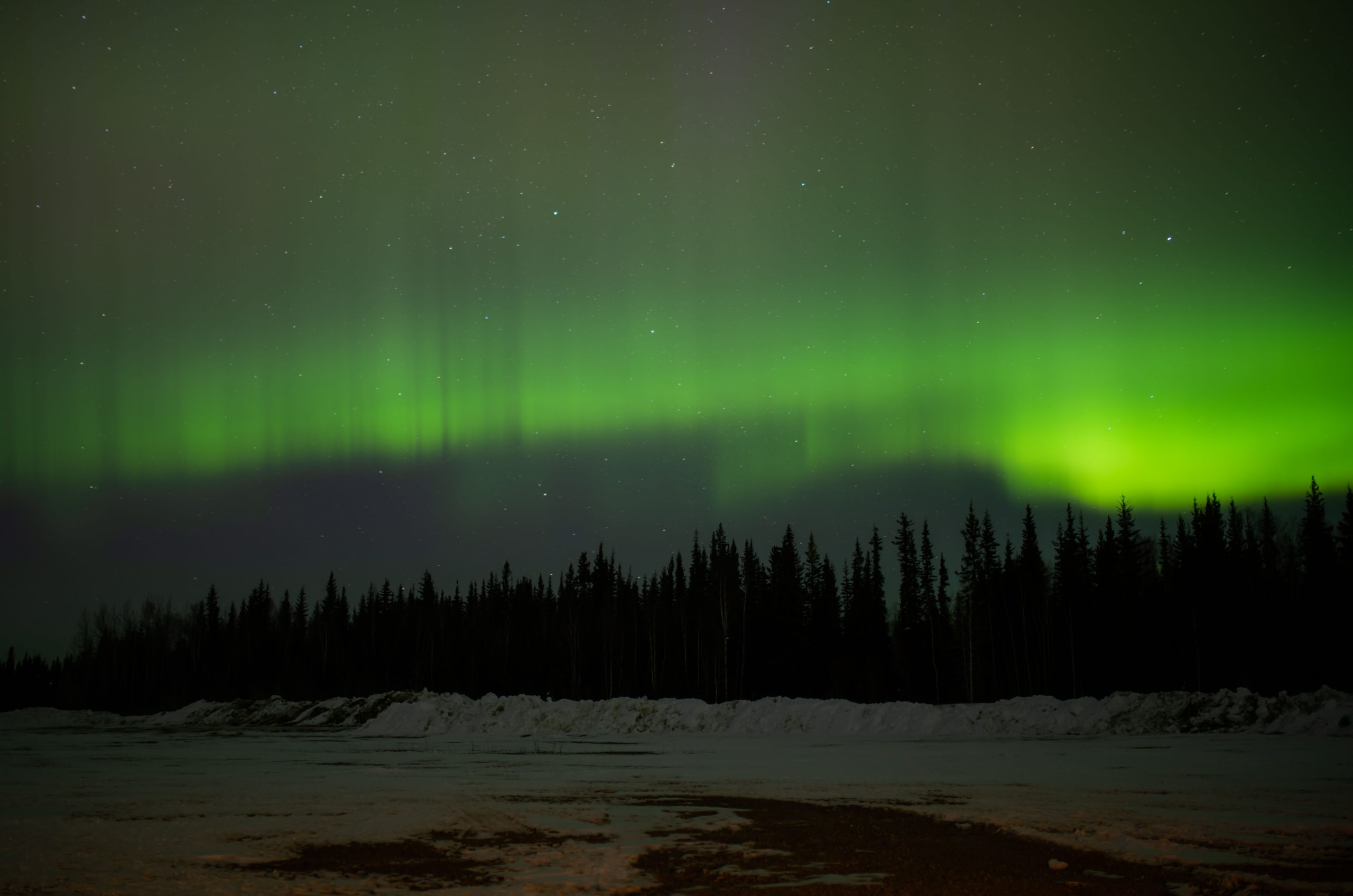
Christmas week in Fairbanks is not a conventional holiday break. On the winter solstice, Alaska’s interior city receives about three hours and forty-one minutes of sunlight, and December temperatures typically sit well below freezing. That combination of short days, deep cold, and long darkness is exactly what makes the week unusual – and exactly what the region’s high-end winter operators are built around.
For travelers for whom cost is not the deciding factor, the appeal is less about gold-plated amenities than about privacy, warmth, and logistics handled invisibly. This guide covers how a Christmas week in and around Fairbanks is usually structured: where the private lodges are, what a helicopter tour can and cannot deliver in winter, and how to plan around a climate that shapes every hour of the day.
What a Christmas week in Fairbanks actually looks like
Darkness is the headline. The U.S. Fish and Wildlife Service notes that from early November to early February, Fairbanks sees fewer than seven hours of daylight, and on the winter solstice the sun climbs only briefly above the horizon. The night is long enough that aurora viewing, not daytime sightseeing, tends to anchor an itinerary.
The cold is the second constant. National Weather Service climate records for Fairbanks put the December average high at about 4.8°F and the average low near -12.9°F, with cold snaps reaching considerably lower. Luxury in this setting is largely a thermal problem solved well: heated vehicles, door-to-door transfers, warm gear provided on site, and lodges where guests can watch the sky without standing outside for hours.
Private lodges: what high-end looks like at 65°N
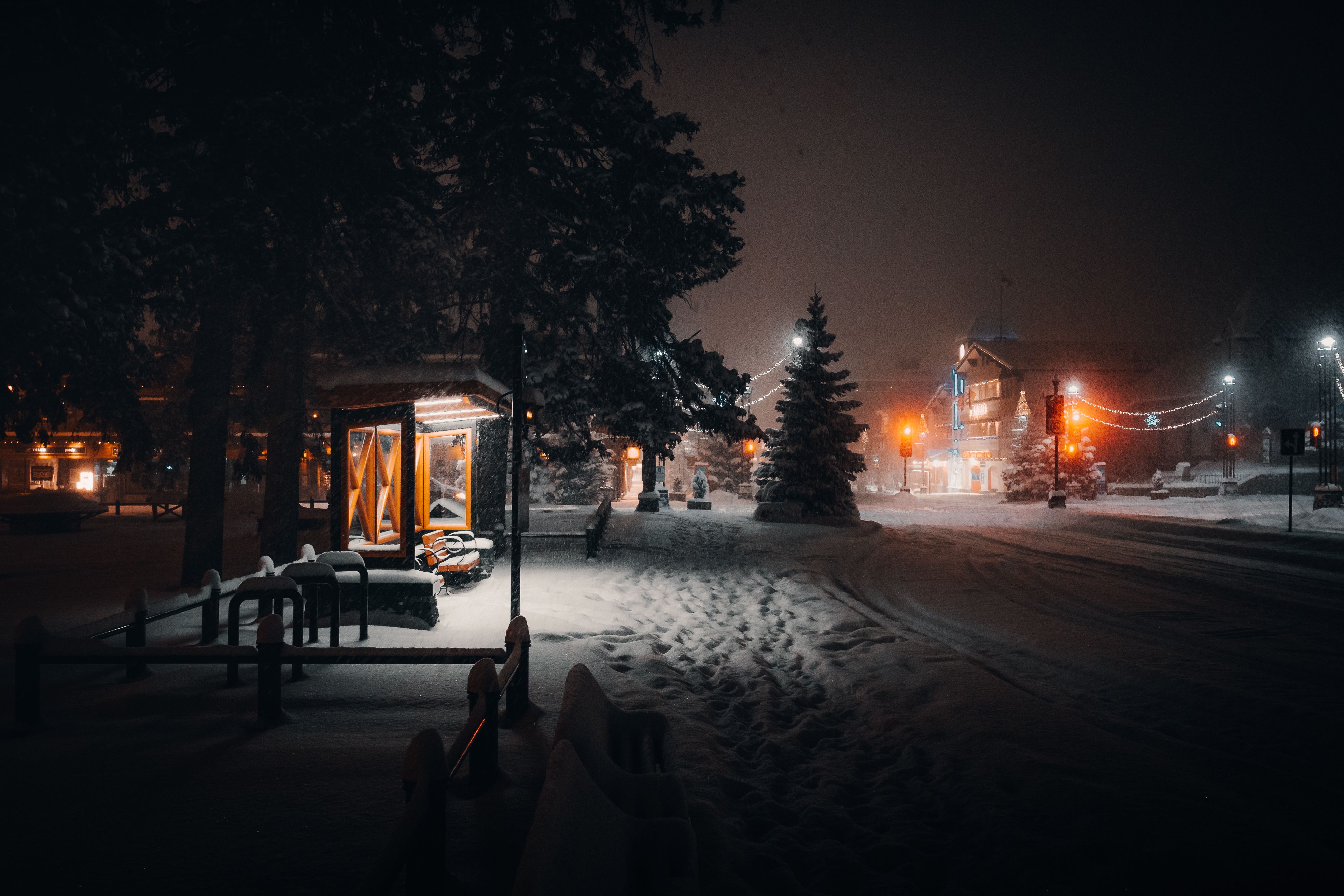
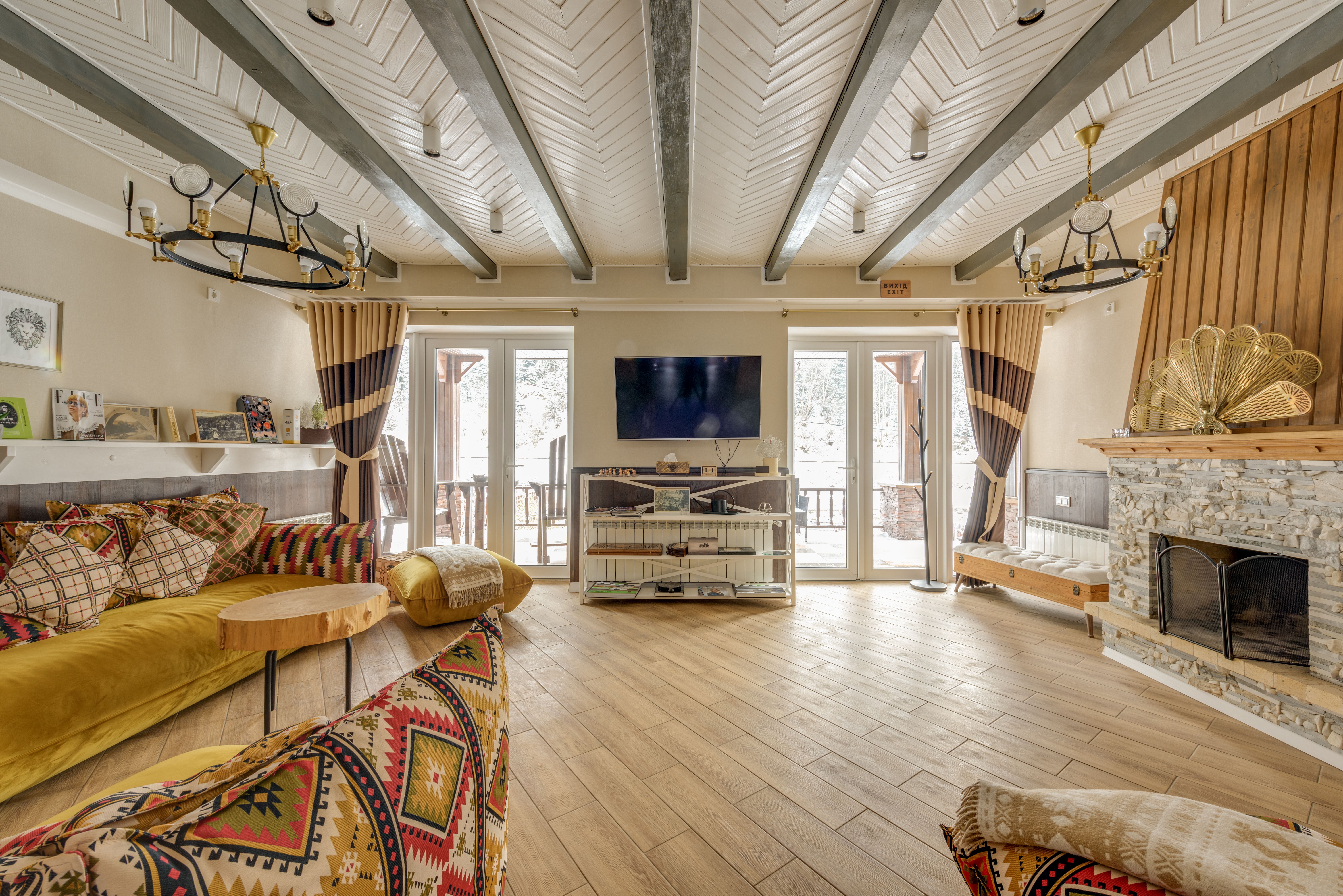
The best-known purpose-built option is Borealis Basecamp, set on a dark-sky ridge about 25 miles north of Fairbanks. Its accommodations are transparent-domed igloos and “Arctic Cubes” with panoramic windows, positioned so guests can watch the aurora from bed, and all stays include aurora wake-up calls. For the 2026–27 season, winter packages are listed from roughly $4,098 per party, with bookings running from November 15, 2026, through April 10, 2027. On-site dining, a sauna, snowmobile and snow-coach excursions, and a reindeer enclosure are part of the setup.
Alongside the larger properties, a number of smaller operators run private wilderness lodges and cabins for exclusive use. Face The Outdoors caps its small-group tours at 10 guests and offers full-lodge private bookings; Aurora Black Truck Tours lists a private aurora tour at $1,295 per group for up to five passengers. The pattern across these businesses is similar — fewer guests, more included, and a single point of contact — and it is the main reason guests pay a premium over a standard hotel-and-bus package.
Helicopter tours: matching the aircraft to the terrain and the season
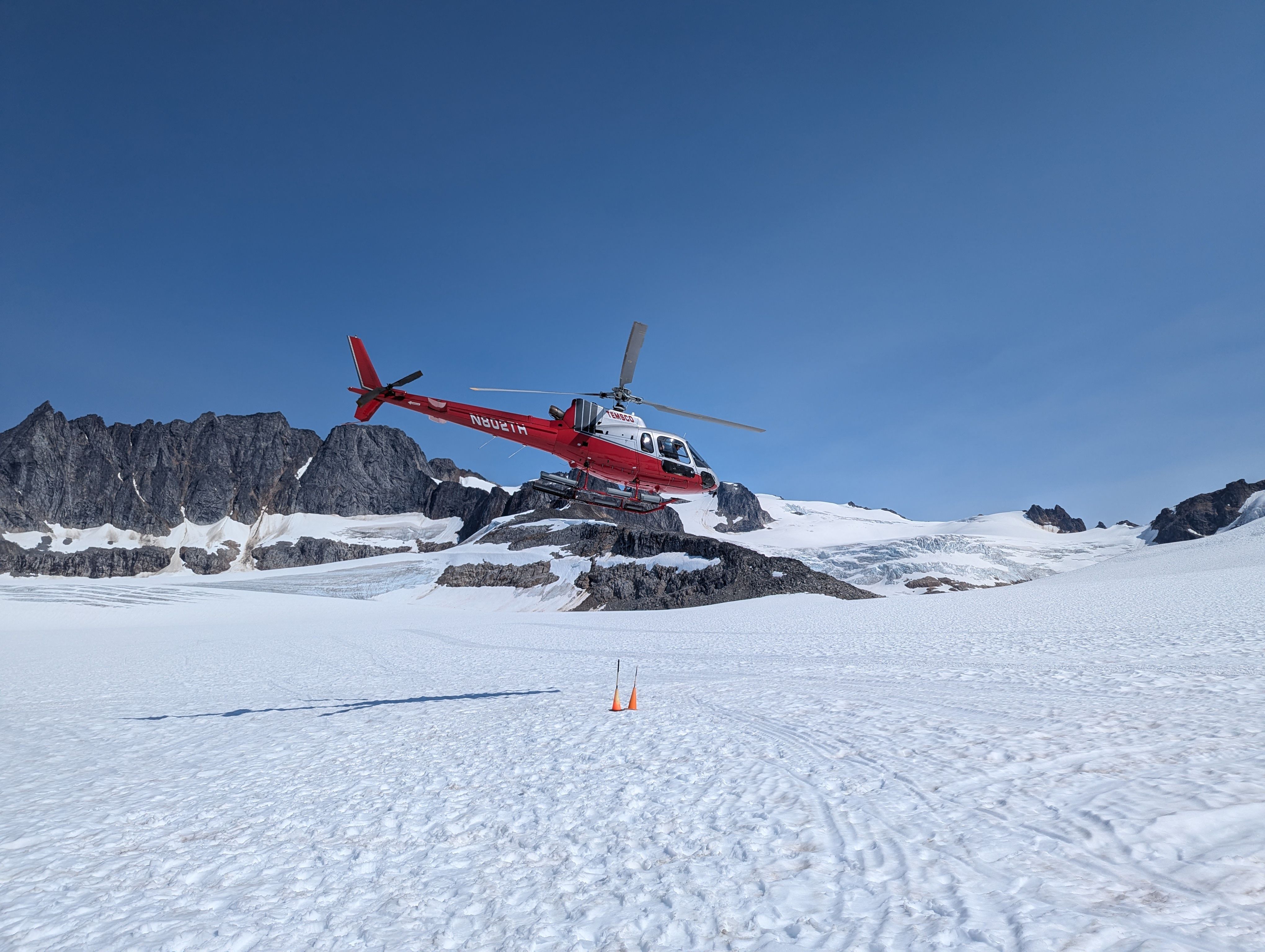
Helicopter flightseeing is one of the most requested luxury add-ons in Alaska, but in winter it is more constrained than the brochures imply. The state’s established winter glacier and ice-cave helicopter tours depart largely from the Palmer and Anchorage area in Southcentral Alaska. Alaska Helicopter Tours, for example, runs a two-hour Winter Glacier Exploration from mid-December to mid-March, and Outbound Heli Adventures offers ice-cave flights from Palmer between December and March, both weather dependent. Fairbanks, in the interior, is a different market.
From Fairbanks, air excursions more commonly use fixed-wing aircraft and helicopter charters. Heli Alaska, an FAA-certified operator, advertises Fairbanks-to-Arctic-Circle helicopter tours and notes that the best conditions generally fall between late spring and early fall. Travelers planning a Christmas-week helicopter flight should treat schedulability as a real question, confirm winter availability directly with the operator, and not assume a glacier landing is a standard December product.
Regulation matters here as much as scenery. Small helicopters are governed by weight limits per seat and per aircraft, so parties should expect to declare weights at booking, and operators typically build in rescheduling or refunds when weather makes a flight unsafe. A helicopter tour is best understood as a weather-permitting adventure rather than a fixed appointment.
Filling the daylight hours
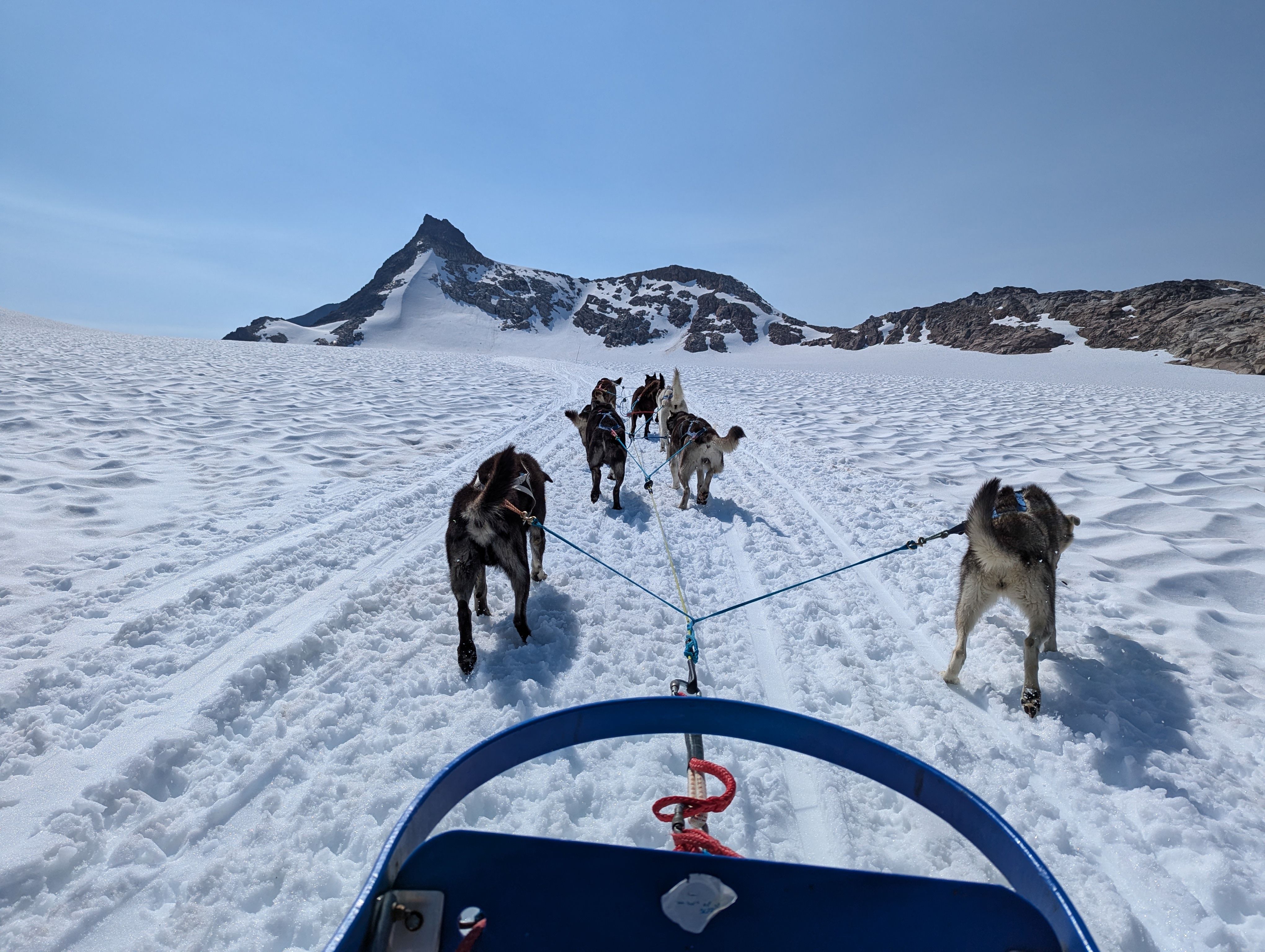
The short window of light is best used for activities that generate their own warmth. Dog sledding is the signature winter experience in the region, with mushers running teams over forest trails and frozen lakes; snowmobiling, snowshoeing, and ice fishing fill out the rest. Chena Hot Springs, roughly 60 road miles northeast of Fairbanks, pairs the Aurora Ice Museum with outdoor mineral baths that run near 106°F, and its dark-sky location makes it a dual-purpose day and night stop.
Indoor options matter too. The Museum of the North at the University of Alaska Fairbanks and the Morris Thompson Cultural and Visitors Center are the standard cold-weather refuges downtown, and both are useful for understanding the region’s Indigenous history and geology before heading back into the dark.
North Pole, a small city about 15 minutes south of Fairbanks, leans fully into the season. The Santa Claus House operates year-round with an oversized Santa statue, a live Santa, and a reindeer enclosure at the adjacent Antler Academy. The community also holds a candlelight ceremony and tree lighting on the first Sunday of December and a Winterfest and Holiday Bazaar in early December. Because local events change from year to year, visitors should confirm current dates and hours before building a day around them.
Aurora viewing: timing, odds, and what changes by month
Fairbanks sits directly beneath the auroral oval, the band of maximum activity around the geomagnetic pole, which is why it is one of the most reliable aurora destinations in North America. Explore Fairbanks, the region’s visitor bureau, describes an aurora season running August 21 to April 21 and advises that visitors who stay at least three nights and go out during the late-evening hours raise their chances above 90 percent, provided the skies are clear and dark. The University of Alaska Fairbanks Geophysical Institute, one of the world’s leading aurora research centers, is based in the city.
Aurora activity is variable and cannot be guaranteed on any single night, so length of stay matters more than any forecast. Geomagnetic activity also has a seasonal rhythm. Research on the “Russell–McPherron effect,” first described in 1973, indicates that geomagnetic storms are more frequent around the equinoxes in September and March than around the solstices, while December and January deliver the greatest number of dark hours. Local operators often point to February and March for the clearest skies, which is why that stretch tends to be the busiest and most expensive.
| Month | Approximate hours of darkness | What tends to matter |
|---|---|---|
| December | ~20 hours | Longest nights of the year; highest holiday demand; cloud cover can be heavier |
| January | ~19 hours | Deep, dark nights; some of the coldest temperatures of the season |
| February | ~15–16 hours | Often clearer, more stable skies; demand begins to rise |
| March | ~11–13 hours | Equinox tends to lift geomagnetic activity; busiest and priciest stretch |
Approximate hours of darkness are based on published daylight tables for Fairbanks; viewing-quality notes reflect general operator guidance for the 2025–26 and 2026–27 seasons. Aurora activity is variable and no operator can guarantee a display on a given night.
Dining, celebration, and the -30°F wardrobe
Celebration is where luxury operators tend to differentiate. Borealis Basecamp’s snow-coach tour ends at a hilltop viewpoint with a champagne toast at sunset, and private dinner arrangements and on-site restaurants such as Latitude 65 are common at the larger lodges. For a milestone Christmas, the more meaningful upgrade is usually the private framing — a lodge bought out, a guide assigned to one party, a schedule that bends to the group rather than the other way round.
The broader luxury-travel market has moved in the same direction these properties are betting on. Virtuoso’s 2026 Luxe Report, based on a survey of more than 2,400 travel advisors, found that 45 percent had seen increased requests for “ultraluxe” travel — defined by exclusive use and private experiences — with all-inclusive arrangements, celebration travel, and privacy topping the list. High-end experiential travel is a subject that attracts broader industry coverage as it develops, from remote polar itineraries to private-island retreats.
At these temperatures the wardrobe is part of the experience, not an afterthought. Layered base, mid, and shell garments, insulated and roomy boots, and a face covering make the difference between watching the aurora for twenty minutes and watching it for three hours. Winter gear can be rented locally rather than packed, and photographers benefit from spare camera batteries kept warm inside a coat and a sturdy tripod for long exposures.

Getting there and getting around
Fairbanks International Airport has direct service from several major West Coast hubs, which keeps the trip to a single connection for many travelers. The Alaska Railroad’s Aurora Winter Train connects Anchorage and Fairbanks on weekends from mid-September to mid-May, a roughly 12-hour journey through the Alaska Range; Anchorage–Fairbanks fares were listed at $259 for adults and $130 for children in the 2025–26 winter season. The train is a slow, scenic alternative to flying and can be combined into a rail-fly package in either direction.
Once in the region, transfers matter more than they would almost anywhere else. Reputable lodges generally include airport and hotel pickups, and driving in extreme cold on rural roads is best left to operators who do it daily. Independent travelers should plan for block heaters, emergency supplies, and the possibility that a clear forecast can change within a few hours.
Frequently asked questions
Is Christmas week a good time to see the northern lights in Fairbanks?
Yes, in the sense that December offers the longest hours of darkness of the year. It is not the statistically strongest month for geomagnetic activity, and skies can be cloudier than in late winter, so a stay of several nights remains the most reliable strategy.
How cold does Fairbanks get in December?
National Weather Service climate records put the December average high near 4.8°F and the average low near -12.9°F. Colder stretches are normal, so gear rated for well below zero is the practical baseline.
Can you take a helicopter tour from Fairbanks in winter?
Some charter operators advertise Fairbanks-area helicopter flights, but the state’s established winter glacier and ice-cave tours mostly depart from the Palmer and Anchorage area. Winter flights are weather dependent, so availability should be confirmed directly with the operator.
How many nights should you book?
Explore Fairbanks advises at least three nights in the region for a strong chance of an aurora sighting. Many operators suggest four or more during midwinter, since cloud cover and aurora activity vary from night to night.
Where do guests stay for a luxury Christmas week in Fairbanks?
Options range from purpose-built dark-sky resorts such as Borealis Basecamp to private wilderness lodges booked for exclusive use, to high-end rooms in downtown Fairbanks paired with nightly guided aurora tours.
Do you need a rental car?
Not necessarily. Most premium lodges and tours include transfers, and letting operators handle winter driving is generally the lower-stress choice. A car is helpful only for travelers who want to explore independently during the short daylight window.
How this article was put together
This guide set out to describe how a high-end Christmas week in Fairbanks is actually organized rather than to rank operators. Daylight and temperature figures come from U.S. Fish and Wildlife Service and National Weather Service climate records for Fairbanks; aurora-season guidance comes from Explore Fairbanks. Pricing, seasons, and tour details were checked against operator websites in September 2026 and reflect published rates for the 2025–26 and 2026–27 winter seasons. Aurora sightings cannot be guaranteed on any given night, and winter flight availability changes with weather, so confirm current details directly before booking.